Email: rpoznanski@rockefeller.edu
 |
| Dr. Roman R. Poznanski Caspary Auditorium at The Rockefeller University |
His other research direction has been
on the establishment of a new generation of neural networks, in particular, the
biophysical foundations of neural network theory (as embodied in his book, Biophysical
Neural Networks, Mary Ann Liebert, 2001).
He was the first to reveal how microscopic-level biophysical properties (e.g.,
endogenous structures, ion channels; neuronal geometries) may be explicitly
incorporated into an analytical formalism that predicts mesoscopic-level
functionality. His "ionic cable theory" approach has
two major advantages: (1) avoids the mathematical errors and uncertainties
inevitable in iterative computational models that necessarily discretise time
and space; (2) provides a framework for generating complete and exact solutions
for network output enabling dynamical continuity to be reflected through
spatiotemporal patterns as a field of influence for dynamic cognitive
processes, which led to consider more sophisticated artificial systems, like
the 'cognitive' brain-computer interface (embodied in the book, Modeling in the Neurosciences: From
Biological Systems to Neuromimetic Robotics, CRC
Press, 2005) .
His more recent work focuses on electrophysiological applications of cable theory with microstructure to elucidate how polarization-induced capacitive currents affect the excitability process in general. The new models find their foundations in Maxwell's theory of the electromagnetic field. In classical Nernst-Planck theory, the neuronal membrane has no structure, and therefore, any attempt at combining the dynamics described by time-dependent Nernst-Planck equation for the spatial distribution of ionic concentration with cable theory is fortuitous. Ionic current flow based on a Maxwellian approach is not physicochemical and currents caused by concentration gradients are neglected. However, this new cable theory of protein polarization approximates electrodiffusion in physicochemical systems and is comparable with, yet resilient to the epistemological limitations inherent in the classical Hodgkin-Huxley system.
It was Alan Hodgkin, FRS who said: “electrodiffusion is like a flea hopping in the storm” meaning that ionic current flow in the presence of an electric field has no coherency compared with an action potential, but Hodgkin never envisaged ionic current flow as a propagating soliton-like wave. It was Andrew Huxley, FRS who in 1959 suggested that a subthreshold disturbance can be initiated by numerically solving Hodgkin-Huxley equations, but these subthreshold oscillations as envisaged by Huxley in the 1950s are not the only subthreshold responses to exist, especially in the submicron branchlets with endogenous proteinaceous structures. Subthreshold oscillations are unstable and collapse on interaction, while non-decremental waves with solitonic properties lead to nonlinear superposition necessary for carrying semantic information in long-term memory.
His more recent work focuses on electrophysiological applications of cable theory with microstructure to elucidate how polarization-induced capacitive currents affect the excitability process in general. The new models find their foundations in Maxwell's theory of the electromagnetic field. In classical Nernst-Planck theory, the neuronal membrane has no structure, and therefore, any attempt at combining the dynamics described by time-dependent Nernst-Planck equation for the spatial distribution of ionic concentration with cable theory is fortuitous. Ionic current flow based on a Maxwellian approach is not physicochemical and currents caused by concentration gradients are neglected. However, this new cable theory of protein polarization approximates electrodiffusion in physicochemical systems and is comparable with, yet resilient to the epistemological limitations inherent in the classical Hodgkin-Huxley system.
It was Alan Hodgkin, FRS who said: “electrodiffusion is like a flea hopping in the storm” meaning that ionic current flow in the presence of an electric field has no coherency compared with an action potential, but Hodgkin never envisaged ionic current flow as a propagating soliton-like wave. It was Andrew Huxley, FRS who in 1959 suggested that a subthreshold disturbance can be initiated by numerically solving Hodgkin-Huxley equations, but these subthreshold oscillations as envisaged by Huxley in the 1950s are not the only subthreshold responses to exist, especially in the submicron branchlets with endogenous proteinaceous structures. Subthreshold oscillations are unstable and collapse on interaction, while non-decremental waves with solitonic properties lead to nonlinear superposition necessary for carrying semantic information in long-term memory.
 |
Electrotonic
potentials are classically non-propagating local potentials in dendrites. They are sub-threshold waveforms and have no refractory period and
propagate passively over short distances and for short time periods. We know that
there is a transition from sub-threshold to supra-threshold when membrane
potential exceeds a threshold (usually in the axon hillock) than conformational
changes result in action potentials. There are also g-pulses occurring in
dendrites reflecting this transition. Solitonic conduction of electrotonic signals in neuronal
branchlets does not fall into any of the classical electrical signaling modes
and was shown to be a novel signaling mode, interdependent on polarized
microstructure and independent of synaptic potentials. From: Solitonic conduction of electrotonic signals in neuronal branchlets with polarized microstructure, Scientific Reports, vol. 7: 2746 (2017).
|
 |
| Dr. Poznanski in Rockefeller University's Weiss Research Building |
Dr. Poznanski has embarked on the
biophysics of memory and how it depends on: (i) changes in protein
metabolism accompanying learning; (ii) memory trace formation (encoding) and
storage (consolidation) in assemblies at the subcellular level through
phosphorylation; and (iii) decoding through dendritic protein polarization
by electrical pulses. The prevalent hypothesis is that memory is
sub-served by modulation in gene expression. The prevailing dogma is that
synapses underwrite our long-term memories spanning multiple brain regions and over multiple timescales, but not across spatiotemporal scales. How long-term procedural memories in the striatum are retrieved is different from semantic memories in the cortex. The neural dynamics are uniquely driven by electrical patterns not based on the stereotypical spikes.
 |
Prof Poznanski was awarded a certificate for teaching excellence from the University of Malaya where he was a visiting professor in 2009-2010. |
In the 2010s he had collaborated with the Polish mathematician Stanislaw
Brzychczy (AGH University of Science and Technology) on the development of
nonlinear analysis methods to better understand the intricate
fallacies of methodological reductionism in computational neuroscience. One recent
example of this research is the application of nonlinear functional analysis to
the cable equation proving that discrete models of neurons like 'multi-compartmental
models and spiking neuron models' are both dynamically implausible
representations of real neurons. This research has implications for
'multi-scale' modeling that are supposed to be ultra 'realistic' attempts
at modeling the brain. One limitation is that such 'multi-scale' models are
incapable of harnessing 'bridges' across scale without producing a false sense
of biological reality because compartmentalization and
discretization are subject to dynamical misalignment.
In computational neuroscience, reductionist approaches span multiple levels of neural organization; however, in integrative neuroscience, each level is seamlessly sculptured as part of a continuum of levels. Reductionism assumes a direct causal relationship between a molecular/cellular mechanism and a behavioral phenomenon, ignoring the constraints that higher-level properties exert on the possible brain functions of that mechanism. One of these constraints is the continuity of brain functions, which is intrinsically difficult to harness computationally. The integration of brain functions depends on nonlocal interactions of brain functions.
In computational neuroscience, reductionist approaches span multiple levels of neural organization; however, in integrative neuroscience, each level is seamlessly sculptured as part of a continuum of levels. Reductionism assumes a direct causal relationship between a molecular/cellular mechanism and a behavioral phenomenon, ignoring the constraints that higher-level properties exert on the possible brain functions of that mechanism. One of these constraints is the continuity of brain functions, which is intrinsically difficult to harness computationally. The integration of brain functions depends on nonlocal interactions of brain functions.
The dogma of superintelligence: Just like artificial neural networks (deep or shallow) cannot simulate biophysical neural networks leading to human cognition, artificial intelligence (super or general) will not be able to mimic phenomenological consciousness. Indeed most if not all artificial neural networks are based on connectionism and work by changing their synaptic connections. At best they can mimic, for example, sequential learning. The decoding of memories is mediated by conscious introspection without learning or changes to synaptic connections. Alternative models based on Biophysical Neural Networks must be used to address the interrelationship between consciousness and nonsynaptic plasticity mechanisms of memory.
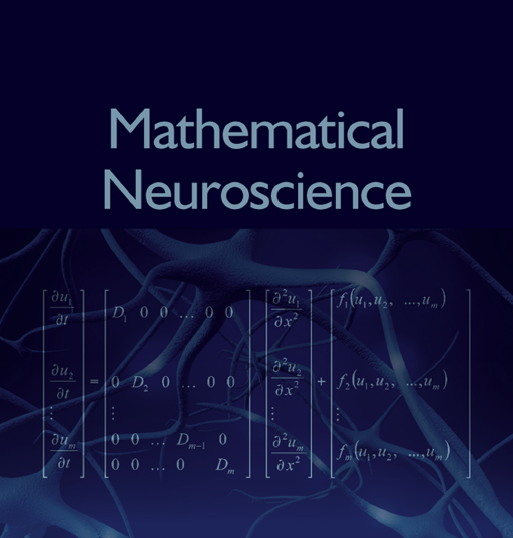 |
| MATHEMATICAL NEUROSCIENCE (2013) is the first book on the development of a nonlinear functional analysis to better understand the intricate fallacies of methodological reductionism in neuroscience. |
He is currently advancing the quantum foundations of biological consciousness. It is based on realists attempt at interpreting quantum mechanics by distinguishing the epistemological aspect from the ontological aspect of Heisenberg's uncertainty principle. Shannon information theory as a foundational basis of computational neuroscience corresponds to the explicate order. Intrinsic Gödelian information corresponding to the implicate order. If qualia in bats, birds, and other animals, is dominated by cognition in humans that it [sic] is perceived to be consciousness then one begins to move beyond principles of Shannon information theory to explore how intrinsic information is harnessed in unpredictable, non-local quantum interactions within billions of neurons. Non-reductive physicalism in the sense of integrative neuroscience together with panexperiential materialism is the metaphysics of choice.
In
the book Biophysics of Consciousness (2017),
Poznanski and colleagues pioneered the idea of qualia as the content of consciousness in protein pockets, whose
supramolecular properties were first investigated by Nobel
laureate Albert Szent-Györgyi. He posits that qualia are integrated at the picoscale independently of cognition, thus undermining
the prevailing dogma that neural, cognitive information underwrites
our consciousness.

The Nonlocal Mind in the Brain
How the brain codes consciousness at the very small scale
1. Molecular Bohmian mechanics
2. Self-referential amplification of simultaneity
3. Interconnectedness of active-intrinsic information and functional continuance
4. The transformation capacity of information from quantum to classical
5. Conscious recall of memory engrams
6. Consciousness in wetware: Brain-inspired intelligence technology
7. Nonlocal cortical effects based on pilot-wave theory
8. Sentience in machines based on two-brains hypothesis
9. Towards artificially conscious polaritonic devices
10. Spontaneous potentiality as a precursor to cognitive binding
11. Free will, Qualia, and Feelings in vivo
12. Holism as a property of self-reference
13. Holonomic brain theory
14. Self-referential identity theory and nonreductive physicalism*
*The American philosopher Jaegwon Kim defines “nonreductive physicalism” as: “Mental
phenomena cannot be reduced to physical phenomena”. Our
definition is different: “Physical phenomena that are integrated across levels
cannot be reduced to multiple numbers of single level physical phenomena”.
The final integration of consciousness is the ultimate goal of brain science. Integrative brain function that is based on neuroimaging and statistical averaging whitewash the functional interactions which are nonlocal in the brain. Consciousness is fundamentally nonlocal quantum dynamic effect within cerebral networks. To integrate across scale, the development of a field theory for hierarchical and functional integration in the brain is needed at the quantum and classical realms of reality. To understand the Hard Problem is the attempt to explain consciousness at the junction/edge of the quantum and classical realms of reality. The anomaly placed upon the notion of integrated information whence intrinsic and Shannon information cannot be integrated because physical laws do not exist that allow spanning across the classical and the quantum realms of reality is based on reductionism.
Dr. Poznanski has written papers in high impact ISI-indexed neuroscience journals focusing exclusively on data-rich integrative modeling (not multi-scale, but across scale), realization of intrinsic intelligence as a dynamical process that can be influenced by environmental factors, and his most recent work is on the nonlocal functional interactions across brain regions below the molecular level as the bedrock of consciousness. This research aims to forge forward in the development of truly brain-inspired intelligence technology leading towards the final frontier of conscious artefacts which are man-made constructs that have the capability to fathom the quantum-classical transition in an integrative way. Subjective experiences or sentience arise at the quantum-classical junction which we define to be "qualia". These constructs are built on principles that are far different to cognitive computing inscribed on silicon chips and deep learning algorithms based on optimization techniques (steepest-decent) where retrograde changes to synaptic weights computationally assign meaning.
As Francis Crick (see below) remarked these are gimmicks of neural computation and not how neural networks function in the brain. Neural computation relies on discrete symbolic processing while non-reductive physicalism is based on machinery that is non-computational in a sense it conjures continuance across scale (in a teleofunctionalist epistemology).
"The remarkable properties of some recent computer algorithms for neural networks seemed to promise a fresh approach... Unfortunately most of these neural nets are unrealistic in important respects."
(ii) First to show that conduction velocities in dendrites
are nonconstant [20]. This theoretical result showed that sparse distribution of
ionic channels will determine how information is processed differently in the
dendrites of neurons as opposed to those in axons [21, 22].
(iii) First to find approximate analytical solutions
to the Frankenhaeuser-Huxely equations [14, 38].
(iv) First to construct synaptically and gap-junctionally
connected neural networks with ionic channels discretely juxtaposed in
dendritic cable structures. Such ionic cable models have been applied to
brain function through the development of large-scale brain cell assemblies [17, 23, 24, 27,
39, 40].
(v) First to introduce the conceptual idea that cognition is
determined by how the distribution of endogenous proteins (e.g., ion channels)
and synaptic inputs along the dendrites of neurons is integrated with the
collective behaviour of a large population of neurons grouped together as
assemblies [15].
(vi) First to propose and develop nested neural network models
for fMRI [12].
(vii) First to debunk the assumption of isopotentiality of small
compartments (under 0.2λ) as a result of significant thermal noise [10].
(viii) First to propose a model-based framework for the
development of a cognitive brain-computer interface [11].
(ix) First to use
functional analysis to prove how neural responses
differ when continuous space is discretised in computational models [2,9].
(x) New theories of long-term memory away from
synapses and dependent on ionic charge configurations [3,4].
(xii) Co-authored first book on the fallacy of computationalism in neuroscience Mathematical Neuroscience [Published].
(xiii) Genomic instantiation of consciousness in neurons through a biophoton field theory [Published].
(xvii) Co-edited the first book to reveal the biophysical basis of consciousness [Published].
(xx) Nonsynaptic plasticity model of long-term memory engrams [Published ].
(xxi) Induced mitochondrial membrane potential for modeling solitonic conduction of electrotonic signals [Published ].
(xxii) Spontaneous potentiality as formative cause of thermo-quantum consciousness [Published].
(xxiii) On intrinsic information content of the physical mind in quantized space: against externalism [Published].
(xxiv) Theorizing how the brain encodes consciousness based on negentropic entanglement [Published].
 |
BIOPHYSICS OF CONSCIOUSNESS (2017) is the first book to elucidate the biophysical basis of brain-based consciousness.
|
Physical laws are compounded by functional interactions to
produce biological laws that can only apply to animate matter. Unlike
physical laws, almost all biological laws are time-dependent and thus seem to
appear as too accidental or transient to be named as 'laws' in the explicate
order, but in the implicate order, the emergence of biological laws can
differentiate between complex adaptive systems that evolved consciousness from
machines with simpler mechanisms. For this reason, approaching biological
organisms with reductionism sacrifices the whole in order to study the
parts. What makes living matter profoundly different from ordinary inorganic
matter is how each chemical reaction is coordinated with all the
other for the good of the whole. This transcends explanatory physical laws and
requires biological laws. As we know it, consciousness is invariably
associated with life, so the notion of conscious artifacts is
possible once the mechanization of consciousness becomes a reality. Artificial
life reproduced as a brain in a supercomputer suffers from
methodological reductionist issues that falsely reproduce the true workings of
biological organization and causality.
Th visual cortex is connected with the claustrum that
plays a role in sensory integration, relaying visual information to most parts
of the neocortex, but it is not the loci in the brain for consciousness. If it
were then hydranencephalic children would not be self-aware. Decorticate
animals groom and feed quite well; in fact, they are difficult to distinguish
from intact ones. This is less the case in humans who are more dependent on the
cortex for the execution of bipedal locomotion and fine motor control, of
course not to mention the language and communicable conscious awareness. Zapping
deep in the brain with high-frequency electric shocks would immediately shut
down the corticoclaustral axons. Also, the patient's brain stem and subcortical
structures would be compromised. In hindsight, the claustrum is located in the
cerebral cortex is not where consciousness resides in the brain, but rather, it
plays a vital role in sensory integration. A genuine case of the abolition of
consciousness is not a loss of brain function through cortical sensory
integration but in the brain's total loss of energy.
The hard problem is how the subjective aspect of consciousness or
phenomenal consciousness facilitates 'qualia'. The neuroscience of
consciousness is the easy problem of how access
consciousness interrelates with cognition. The astonishing
hypothesis is not that we are just a pack of neurons, but rather a
molecular system impacted through a quantum dynamic effect occurring
within the pack of neurons in the frequency domain. When you are in the
frequency domain, you are in the platonic world in the sense of Sir Roger
Penrose. Enactivism through periodicities of discrete energies is
undoubtedly a precursor of self-awareness as 'elemental' consciousness with
quantum nonlocality providing the impetus for consciousness and how brain dynamics generates access consciousness or Damasio's core
consciousness. At the quantum realm, where 'elemental' consciousness
facilitates qualia one needs quantum EM potentials. Consciousness is
fundamentally nonlocal, and intrinsic information in the brain reflects
upon this nonlocality. This contrasts with local EM fields integrating
information through a global endogenous EM field proposed in the CEMI theory.
The final integration of consciousness is the ultimate goal of brain science. Integrative brain function that is based on neuroimaging and statistical averaging whitewash the functional interactions which are nonlocal in the brain. Consciousness is fundamentally nonlocal quantum dynamic effect within cerebral networks. To integrate across scale, the development of a field theory for hierarchical and functional integration in the brain is needed at the quantum and classical realms of reality. To understand the Hard Problem is the attempt to explain consciousness at the junction/edge of the quantum and classical realms of reality. The anomaly placed upon the notion of integrated information whence intrinsic and Shannon information cannot be integrated because physical laws do not exist that allow spanning across the classical and the quantum realms of reality is based on reductionism.
Dr. Poznanski has written papers in high impact ISI-indexed neuroscience journals focusing exclusively on data-rich integrative modeling (not multi-scale, but across scale), realization of intrinsic intelligence as a dynamical process that can be influenced by environmental factors, and his most recent work is on the nonlocal functional interactions across brain regions below the molecular level as the bedrock of consciousness. This research aims to forge forward in the development of truly brain-inspired intelligence technology leading towards the final frontier of conscious artefacts which are man-made constructs that have the capability to fathom the quantum-classical transition in an integrative way. Subjective experiences or sentience arise at the quantum-classical junction which we define to be "qualia". These constructs are built on principles that are far different to cognitive computing inscribed on silicon chips and deep learning algorithms based on optimization techniques (steepest-decent) where retrograde changes to synaptic weights computationally assign meaning.
As Francis Crick (see below) remarked these are gimmicks of neural computation and not how neural networks function in the brain. Neural computation relies on discrete symbolic processing while non-reductive physicalism is based on machinery that is non-computational in a sense it conjures continuance across scale (in a teleofunctionalist epistemology).
"The remarkable properties of some recent computer algorithms for neural networks seemed to promise a fresh approach... Unfortunately most of these neural nets are unrealistic in important respects."
Francis Crick (1989) The recent excitement about neural networks. Nature 337, 129-132.
 |
| Roman Poznanski at the Rockefeller University, New York City |
His most significant achievements include:
(i) First to pinpoint the locus underlying retinal direction
selectivity in mammals, circa 1992. Through modeling starburst
amacrine cells he was first to predict that direction selectivity
is linked to their individual dendritic branches in a way that is
still unknown with precision [5,6,13, 32].
(xi) First to elucidate the precise effect of protein polarization
on membrane potential and on the excitability process through propagating
subthreshold potentials that are conducive of
rich-logic requirements in dendrites underlying memory decoding [1].
(xiii) Genomic instantiation of consciousness in neurons through a biophoton field theory [Published].
(xiv) The two-brain hypothesis: towards a guide for
brain-brain and brain-machine interfaces [ Published].
(xv) Genetic algorithms based feature selection for cognitive state classification using ensemble of decision tree [Published].
(xv) Genetic algorithms based feature selection for cognitive state classification using ensemble of decision tree [Published].
(xvi) Does heterogeneity of intracellular calcium dynamics
underlie speed tuning of direction-selective responses in dendrites of
starburst amacrine cells? [Published].
(xvii) Co-edited the first book to reveal the biophysical basis of consciousness [Published].
(xviii) Consciousness as a quantum dynamic effect [ Published ].
(xix) Solitonic conduction of electrotonic signals in neuronal branchlets with polarized microstructure [Published ].
(xx) Nonsynaptic plasticity model of long-term memory engrams [Published ].
(xxi) Induced mitochondrial membrane potential for modeling solitonic conduction of electrotonic signals [Published ].
(xxiii) On intrinsic information content of the physical mind in quantized space: against externalism [Published].
(xxv) Molecular orbitals of delocalized electron clouds in neuronal domains [Published].
(xxvi) Panexperiential materialism: a physical exploration of qualitativeness in the brain [Published].
(xxvii) On the nature of raw feelings [to appear].
(xxviii) Calcium source heterogeneity in starburst amacrine cells underlying speed tuning of direction-selective responses [to appear ].

No. Simulations or models do not carry first person capabilities, so a simulation will be a road map or a blue print to move from metaphysics to reality. The model if implemented in a robotic devise (hardware: spintronics, wetware: quantum fluid) will only exhibit consciousness if the "accuracy" of the model incorporates an understanding of the roots of consciousness based on biomolecular intraneuronal energy processing as suggested in the two-brains hypothesis and panexperiential materialism.
(xxvii) On the nature of raw feelings [to appear].
(xxviii) Calcium source heterogeneity in starburst amacrine cells underlying speed tuning of direction-selective responses [to appear ].
If every neuron in a human brain was accurately simulated in a computer, would it result in human consciousness?

Forthcoming Book


